
Last night’s Moral Maze on the morality of drones is worth
listening to but it should come with a health warning. The cut and thrust nature of the debate that
makes the programme so entertaining can cause key arguments to be neglected or too
easily dismissed. Three of the
‘witnesses’ on the programme are people that I have worked with closely. Chris Cole, Dr Peter Lee and Paul Schulte
span a spectrum of the debate. (Peter
Lee and Paul Schulte were contributors to the Baptist, Methodist and URC report
Drones: Ethical dilemmas in the application of lethal force.) The fourth witness Richard Kemp, a former
Commander of British Forces in Afghanistan, provided a very worthwhile, albeit
somewhat disconcerting, contribution.
 |
| Dr Peter Lee, KCL |
Last night’s debate did have some elements of surprise –
even for the well-established panel members Giles Fraser, Melanie Philips, Matthew Taylor
and Michael Portillo. One came when
Peter Lee was asked, at the start of his witness section, what problems he had
with drones. “I don’t” was the two word
reply. One area in which the flow of argument
seemed less coherent was on the question as to whether or how drones are
different from any other form of air power.
However it was implicitly acknowledged, although not
actually stated, that drones offer a capability to track and kill which is of
an order of magnitude more advanced than other forms of military hardware. Drone technology has been critical to the transformation
of the CIA into a paramilitary organisation. The witnesses (with the exception of Chris
Cole) all seemed to defend the necessity of this development in the context of
counter-terrorism. Paul Schulte argued
from a perspective of pragmatic realism.
His robust tone might have been more subdued had he been asked more open questions
on his view of the morality. As it was,
this section strengthened the overall perception arising from the programme
that combating terrorists with missiles in a global “war on terror” was an
inevitable direction of travel.
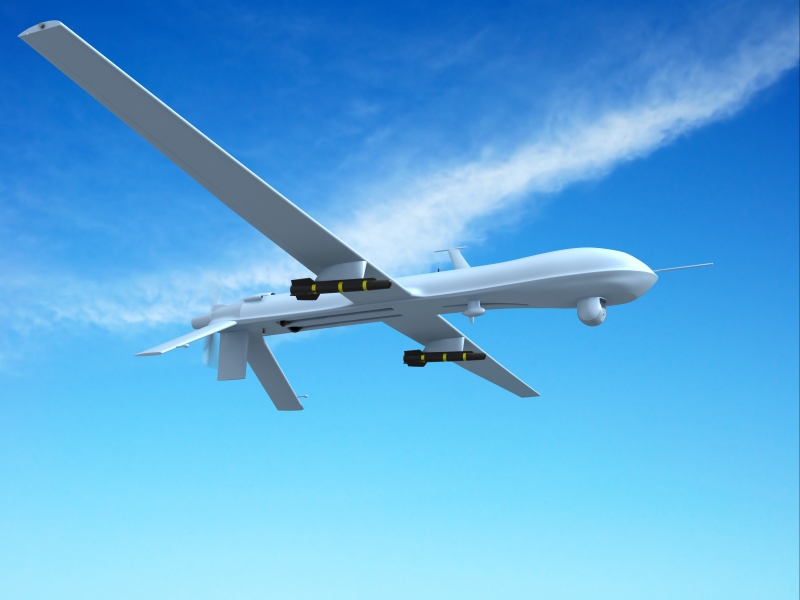 The impact of armed drones on communities who are subjected
to persistent surveillance was poorly addressed in this 45 minute programme. A view from Pakistan was not present. Are we to accept that the impact is exaggerated by the Taliban? The impact of living under drones was covered briefly in the section with
Richard Kemp for whom the impact on communities was an inevitable and excusable
consequence of war. But what about
countries with whom we are not at war?
The impact of armed drones on communities who are subjected
to persistent surveillance was poorly addressed in this 45 minute programme. A view from Pakistan was not present. Are we to accept that the impact is exaggerated by the Taliban? The impact of living under drones was covered briefly in the section with
Richard Kemp for whom the impact on communities was an inevitable and excusable
consequence of war. But what about
countries with whom we are not at war?
We have issues in the UK with video surveillance in our communities. We generally now welcome cameras in our city
centres to help combat crime. We are
less keen to have them scattered throughout our neighbourhoods and outside our
houses. We tolerate or welcome them because
ultimately there is accountability for their use (and indeed now we can elect
our Police Commissioners). We would not however
tolerate a proposal to attach guns to the cameras and enable them to roam our
neighbourhoods freely with no accountability.
Imagine then, that this proposal is not only implemented, but that the
cameras with guns are used to kill 3000 people and are controlled by an
un-trusted even hostile foreign power.
We would have a major uprising on our hands.
What then is the strategy in north-western Pakistan? Not only is the CIA’s use of armed drones an
abuse of human rights, it does not make sense in the battle for heart and
minds. It is causing the family members
of those who have been unjustly and unaccountably killed to join the ranks of
violent Islamic militants.
Giles Fraser, who lectures on ethics and leadership at the
Defence Academy, Shrivenham, and who is the keynote speaker for our conference, Think, Speak, Act, provided an impressive performance against
difficult odds. He was given 5 seconds
for a last word: “it is
difficult but we have to hold ourselves accountable to a higher moral standard
and we still have to believe in the rule of war”.


